Sinful lust New Chapter Is here Guys With School Janitor and Lizania
The Creative Blueprint Is Changing: How AI Is Reshaping Digital Image Making
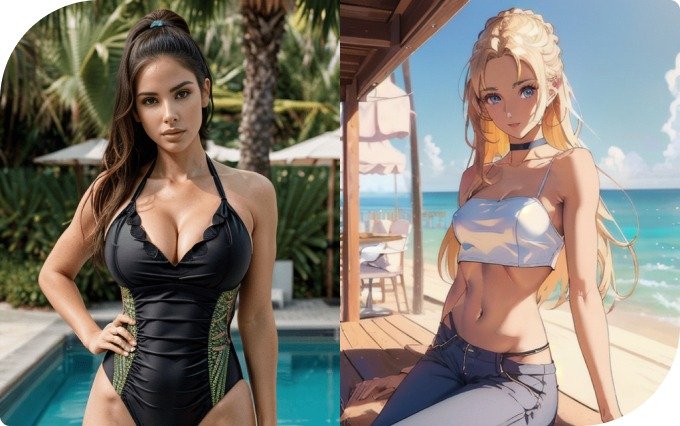
While some creative projects begin with careful planning of a concept, many other projects start with a single element like a color, location, visual example, or simply “what if?” The value of being able to explore your starting point is equivalent in importance to completing the final product.
Platforms that utilize AI to assist creatives have made experimenting and exploring different visual directions possible, which allows the creator to test their ideas before deciding on a direction. A subset of the larger space of generated content through AI includes specialized services that generate adult images (like AI Porn), along with tools for generating illustrations, animations, designs, videos, and digital stories.
Begin With a Creative Constraint
By establishing some limits on your ideas, you may be able to experiment more effectively with them.
In addition to limiting yourself to a specific time, place, mood, composition, and/or palette, creators are given the ability to create within their own boundaries (or constraints).
These constraints will give you a “container” for creating while at the same time giving you room to explore new ways of combining what you have discovered.
Design Around the Focal Point
Every photograph has points of interest (or focus) which draw the viewer’s eye.
Photographers may choose what they wish to be their point of interest. Once this point of interest is identified, photographers can arrange all other elements in the image so as to help draw the viewer to it instead of being drawn away from it.
Explore Negative Space
Negative Space can make for good Design.
Design Elements such as empty spaces within a Composition can emphasize a subject, create Balance, provide Scale to an Image.
Changing the amount of negative space around subjects in images can drastically alter the way that viewers interpret these compositions.
Use Texture to Add Character
Textures in environments affect how they feel.
Different textures have a variety of ways to show what something looks like, such as smooth, rough, shiny, natural, or textured backgrounds.
By using these textures to create the background, creators are able to add personality to their scene with less reliance upon complex subject matter.
Build Around Color Relationships
Instead of selecting colors individually, creators can consider how they interact.
Complementary tones can create contrast, while related shades can produce a more unified appearance.
Testing different color relationships can help establish a recognizable visual atmosphere across an entire project.
Make Scale Part of the Story
Size can communicate importance and context.
A subject surrounded by a large environment may appear isolated, while a tightly framed composition can make the same subject feel more prominent.
Changing scale provides another way to communicate ideas without altering the underlying concept.
Create Visual Transitions
Projects containing multiple images can benefit from gradual changes.
A color palette can shift from one scene to another. Lighting can become progressively different. Environments can evolve while retaining recognizable elements.
These transitions can make separate creations feel connected rather than completely independent.
Explore Alternative Compositions
Rarely is there just one arrangement that best conveys what you want to convey in a scene.
You are able to test and try out different arrangements of elements such as center, asymmetry, layering, and/or environmental framing to find out which composition will effectively communicate your intended message.
Specialized AI Is Expanding
The diversity of AI-generated content has increased dramatically, and there are now multiple platforms that cater to a wide range of creative types and target audiences.
AI Porn is an example of another highly specialized type of fictional AI-generated content. Other platforms have a focus on illustration, character design, animation, video, and digital storytelling.
The increasing variety will allow creators to work within many different project-specific workflows.
Treat Visuals as Building Blocks
Rather than each new individual generation having to be developed on its own.
Each background could serve as a starting point (reference) for additional scenes, each character design could be used as inspiration for an entire group or collection, and each composition could be a model that you draw from when developing your next experiment.
Seeing your visual elements as reusable building blocks can help make larger projects easier to build.
Explore the Same Idea Through Different Moods
You can explore an idea in many moods by using a variety of lighting conditions (including natural and artificial), weather, colors, environments, or compositions to give the same subject an entirely new look.
This gives you the opportunity to find out what mood will suit your concept best.
Use Comparisons to Make Better Decisions
Alternatives become more beneficial when creators compare them intentionally.
Creators will be able to compare differences in composition, Clarity, Atmosphere, Visual Balance, and Overall Presentation within interpretations.
By doing so, rather than simply selecting the latest version, creators can determine what specific elements make each interpretation better suited for their project.
Preserve Creative References
There is great value in creative work even if it will not be used right away.
Artists may want to keep interesting reference materials that have good backgrounds, colors,s or textures to create new ideas. In the long run, the artist’s collection of reference materials becomes an inspirational base for his/her next project.
Let the Concept Expand
A simple image idea can eventually become something much larger.
One environment may inspire a fictional world. A visual motif may become a recurring theme. A single composition may lead to a series of related scenes.
AI-assisted experimentation can make it easier to follow these developments as they emerge.
Avoid Overdesigning
Adding more elements does not necessarily make an image more interesting.
Creators can experiment with removing unnecessary details and allowing important visual features to receive greater attention.
A simpler composition can sometimes communicate an idea more clearly than one filled with competing elements.
Human Direction Remains Essential
AI can generate possibilities quickly, but creators still decide what those possibilities mean.
They determine which visual choices support the project, which experiments are worth pursuing, and which details should be removed or refined.
The technology expands the creative playground, while the creator determines where the project ultimately goes.
Final Thoughts
Creating with AI is a process of discovering new ways to create visually rather than creating complete images.
Each one of the constraints- focal point, negative space, texture, color relationship, size, transition, and composition is a tool for experimenting.
While experimenting individually and collectively with each tool, you will begin to have your own unique visual style that creates a direction in which you want to go and allows you to allow new and unexpected discoveries to shape the direction of your work.





![The Unforeseen Guest [Viagra]_09](https://allporncomic.io/wp-content/uploads/2025/04/The-Unforeseen-Guest-Viagra_09-1-75x106.jpg)


![Short Stories [Jopuari]_0](https://allporncomic.io/wp-content/uploads/2025/05/Short-Stories-Jopuari_0-75x106.jpg)




![My Neighbor’s Widow [Rose Blue 3D]_000](https://allporncomic.io/wp-content/uploads/2025/04/My-Neighbors-Widow-Rose-Blue-3D_000-75x106.jpg)
![Backseat Trip with my Stepmother (Uncensored) [Heraldic Lilly]](https://allporncomic.io/wp-content/uploads/2026/06/Backseat-Trip-with-my-Stepmother-Uncensored-Heraldic-Lilly_11-75x106.jpg)